Can You Grow Vanilla in Florida? Yes, but It Takes Patience
Yes, you can grow vanilla in Florida, especially in warm, humid, frost-free parts of South Florida. That makes it one of the few places in the mainland US where home growers and small farms can realistically try for real vanilla beans.
Still, vanilla isn’t a plant you stick in the yard and forget. It’s a climbing orchid vine that grows slowly, dislikes cold, and needs hands-on care. If you want flowers and beans, not only foliage, your results will depend on location, cold protection, humidity, light, support, and patience.
Why we can grow vanilla in Florida
Florida gives vanilla something most of the US can’t, long warm seasons with high humidity. Vanilla orchids prefer daytime temperatures around 80 to 85 degrees Fahrenheit and nights around 60 to 70. In South Florida, those conditions show up often enough to make outdoor growing possible. Our Vanilla Climate Calculator can give you an idea of modifications and risks for your area as you begin to grow vanilla in Florida.
That climate fit is why UF/IFAS has identified South Florida as a promising place for cultivation. Their vanilla growing guide for South Florida explains that the region has real potential for this tropical crop. As of 2026, UF-led trials and grower interest also show that vanilla is no longer a novelty plant alone. It’s being tested more seriously across multiple Florida counties.
A quick climate snapshot helps put that in perspective.
| Factor | Good for vanilla | Florida reality |
|---|---|---|
| Day temperature | 80 to 85°F | Common in South Florida |
| Night temperature | 60 to 70°F | Often available much of the year |
| Humidity | Near 80% | Often high, but airflow still matters |
| Cold threshold | Below 40°F is risky | Cold snaps remain the main limit |
The takeaway is simple. Florida can support vanilla, but only where cold stays rare and growing conditions stay balanced.
The best areas to grow vanilla in Florida
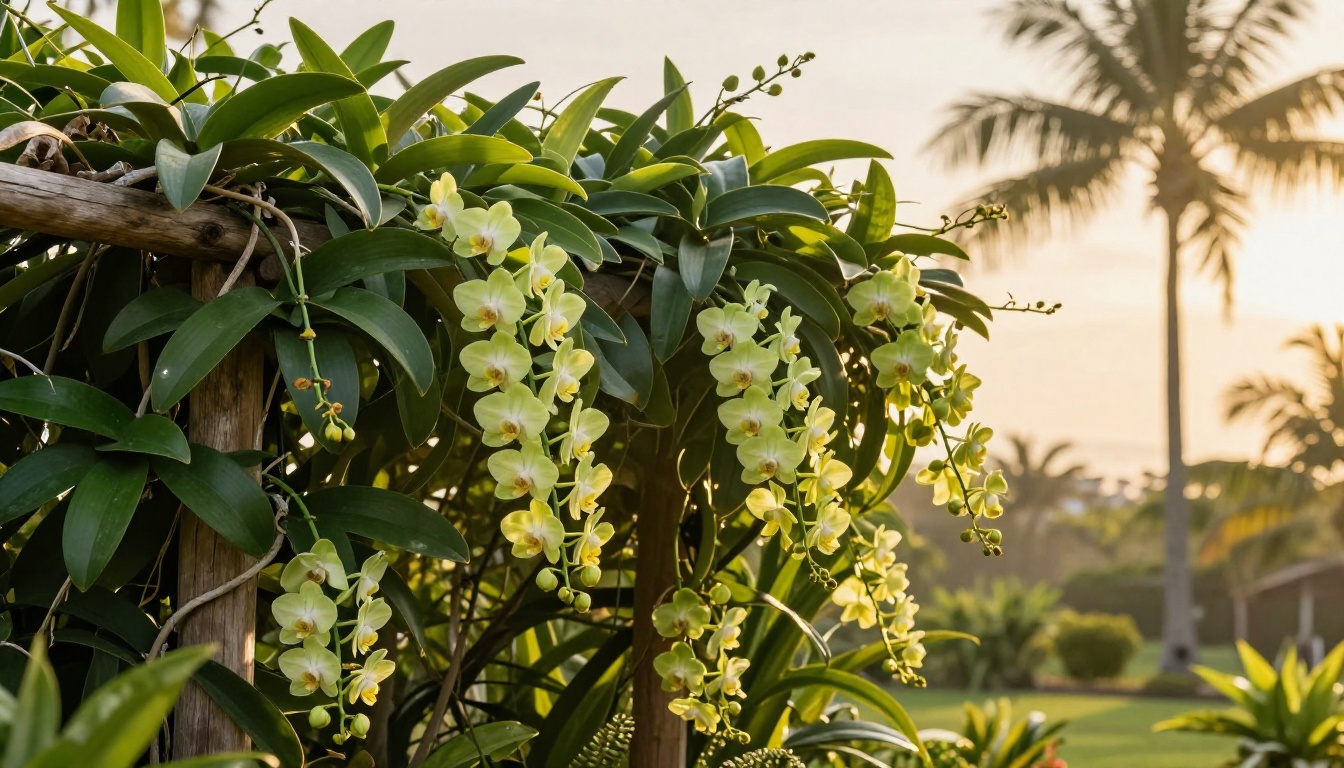
The safest bets are Miami-Dade, the Keys, coastal Collier, Lee, and other frost-protected parts of South Florida. Barrier islands, protected courtyards, and warm urban spots can also help. In zones 10 to 11, vanilla has a much better chance of staying active year-round.
By contrast, inland and northern areas are far riskier. You can still grow vanilla there, but you’ll usually need a greenhouse, a shade house with winter backup, or containers you can move under cover.
When Florida weather becomes a problem
Cold is the biggest threat, not summer heat. A dip below about 40 degrees can damage vines, and a freeze can kill them outright. Storms matter too, because wind can snap long vines or strip them from their support.
Long wet stretches can also cause trouble. Vanilla likes moisture, but soggy roots and constantly wet stems invite rot. In other words, Florida’s humidity helps, while standing water hurts.
What vanilla needs before it will grow, flower, and make beans
Vanilla isn’t a standard garden crop. It’s a climbing orchid, so it needs a setup that feels more like a tropical understory than a vegetable bed. That means filtered light, warmth, high humidity, moving air, a sturdy support, and loose, well-drained media.
Time matters as much as care. Most growers should expect 3 to 5 years from a cutting to first flowering, sometimes longer. If you’re picturing beans in the first season, vanilla will reset those expectations fast. The UF/IFAS Gardening Solutions vanilla page puts it plainly, Florida can grow the vine, but bean production takes more work and maturity.
Light, humidity, and temperature in a Florida backyard
Vanilla wants bright indirect light or partial shade. Too much direct sun can bleach or scorch the leaves. Too little light can slow growth and delay flowering.
For many backyard growers, a shaded patio, lanai, shade cloth structure, or open tree canopy works well. Humidity near 80 percent helps, especially during active growth. At the same time, air must move around the plant so stems and leaves dry out after rain or watering. That balance, moist air with good airflow, is where many beginners struggle.
Potting mix, roots, and the right support to climb
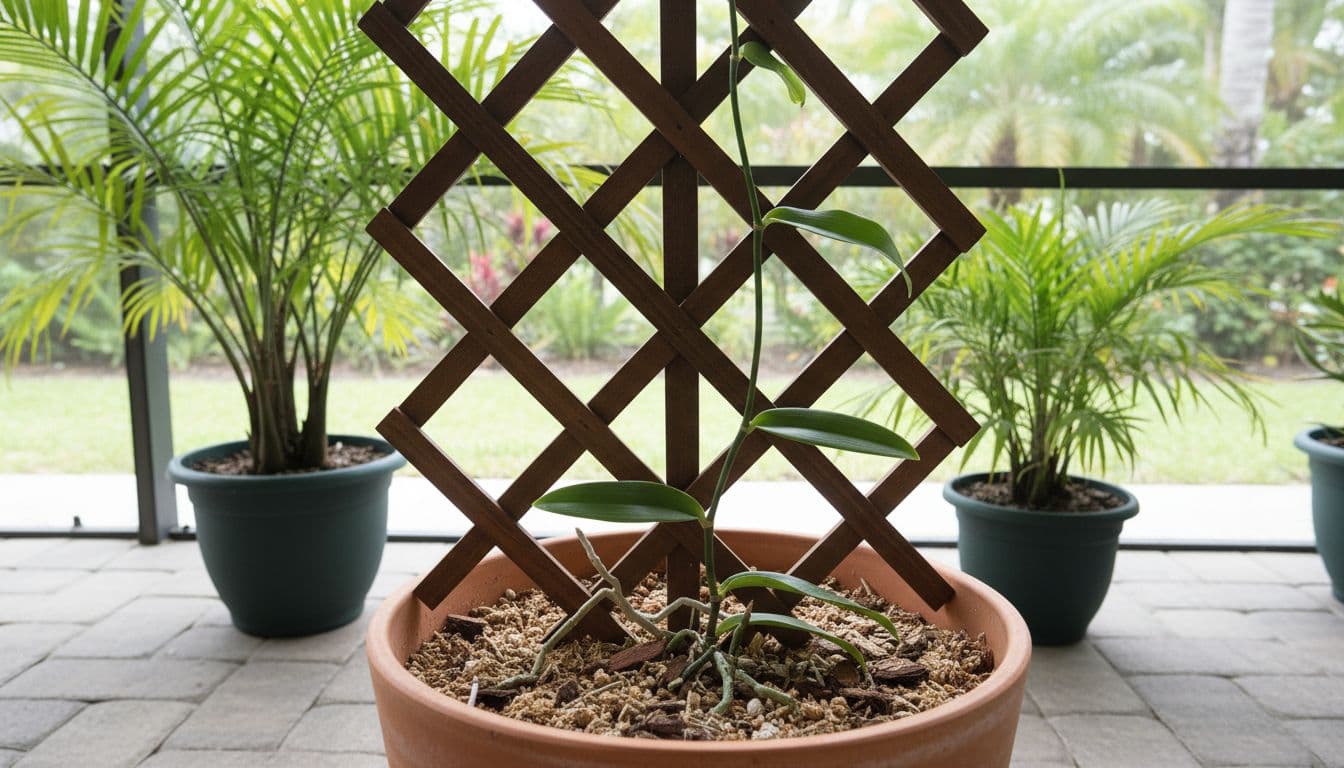
Vanilla roots need air as much as water. A dense, soggy potting soil often causes setbacks, so growers usually use a loose mix with bark and other chunky material. Excellent drainage matters more than fancy ingredients.
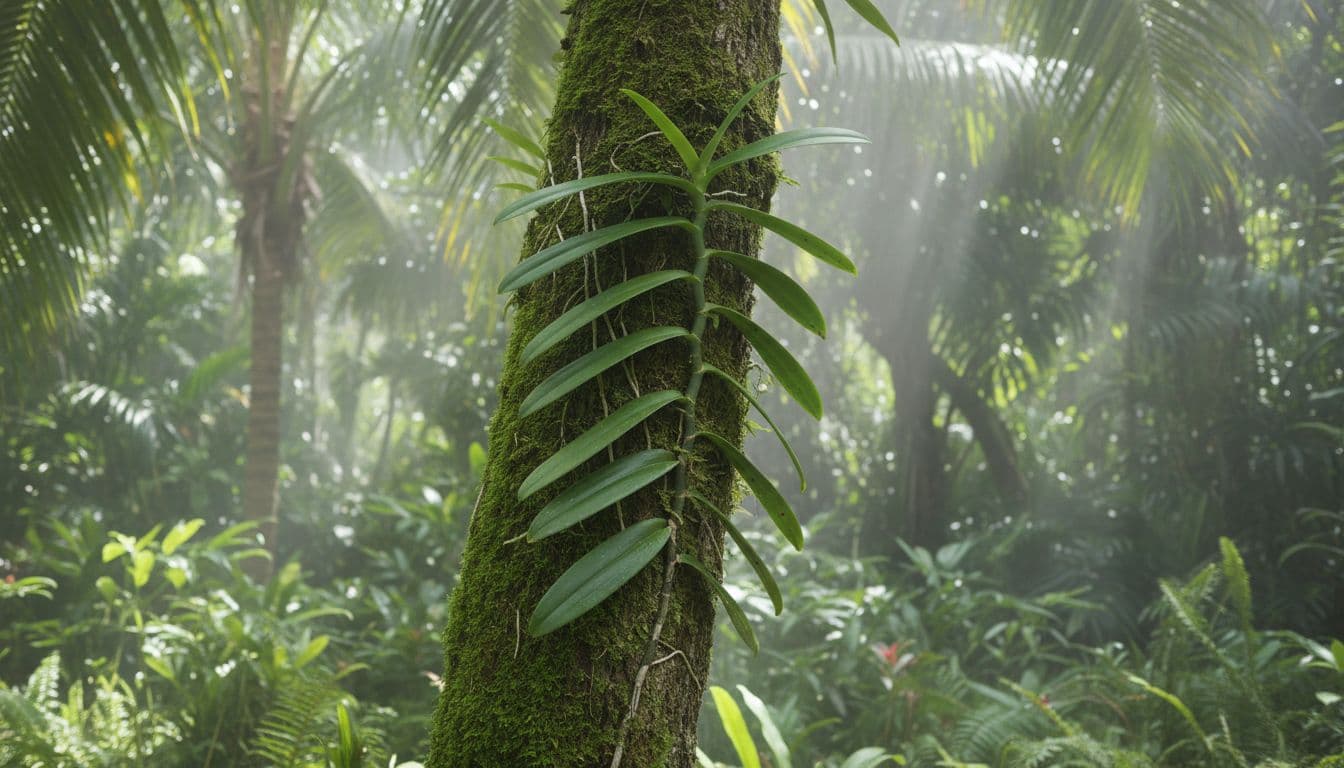
The vine also needs something solid to climb. A trellis, post, rough wood frame, or living tree can work. As the vine grows, aerial roots may grab the support and also reach toward moisture. Some growers guide sections back toward the pot or ground to encourage stronger rooting and better vine size over time.
How to grow vanilla in Florida without making the most common mistakes
A simple setup beats an overbuilt one. Start with a healthy cutting, place it in bright filtered light, give it a climbable support, and keep the root zone moist but never waterlogged. Then train the vine as it grows, feed lightly during active growth, and prepare for winter before the first cold alert arrives.
Most failures come from a few repeated mistakes. Harsh sun burns the plant. Soggy media rots roots. Stale air invites disease. Impatience leads people to keep changing the setup before the vine settles in.
Start with healthy cuttings and the right vanilla type
Most beginners start with Vanilla planifolia, the main species used for commercial vanilla beans. It’s the standard choice for a reason, because it has the flavor profile most people know and the best track record in cultivation. Some growers also try V. pompona or V. × tahitensis, but V. planifolia remains the usual first pick.
Plant quality matters. Choose thick, green, unshrunk cuttings from a clean source. Damaged or weak cuttings often stall for months.
There’s also real research behind Florida’s potential. Recent UF vanilla breeding work has looked at yield, quality, and disease resistance, which gives growers more reason to take the crop seriously.
Water, feeding, and the dry rest that helps trigger flowers
Vanilla likes steady moisture, not wet feet. In South Florida’s rainy season, established plants may need little extra irrigation. During dry spells, though, they can dry out faster than you’d expect, especially in containers.
Feed lightly and regularly while the vine is actively growing. A balanced orchid or gentle all-purpose fertilizer usually works better than heavy feeding. Too much fertilizer can push soft growth that is easier to damage.
Flowering can also depend on a change in pattern. Some growers use a drier rest period of around two months to help trigger blooms, then resume more regular moisture as flowering approaches. The UF/IFAS Miami-Dade overview for vanilla as a cash crop reflects the same point, site choice and management matter as much as the species itself.
Hand pollination and why flowering does not guarantee beans
This is the step many people don’t expect. Even if your vanilla flowers, you usually need to hand pollinate each flower the day it opens if you want beans. A bloom is short-lived, often lasting only that one day.
That timing is everything. Miss the window, and the flower fades without setting fruit.
Bean production also adds another layer of labor after pollination. So if your goal is homegrown vanilla, treat flowering as a milestone, not the finish line.
The biggest Florida challenges, and how experienced growers work around them
It’s possible to grow vanilla in Florida, but Florida can also punish sloppy setups. Cold snaps, heavy rain, fungal issues, snails, slugs, and storm damage are the usual troublemakers.
The fastest way to lose a vanilla vine in Florida is a bad mix of cold and wet.
How to protect vanilla from cold, storms, and excess rain
Containers help in borderline areas because you can move plants before a cold night. If the vine is too large to move, place it in the warmest protected spot you have, such as a south-facing wall, screened lanai, or greenhouse corner. Temporary covers can help during short cold events, but they aren’t a full fix if freezing weather lingers.
Storm prep matters too. Secure trellises, tie loose vines, and avoid exposed windy spots. Excess rain is harder to control outdoors, so drainage and shelter become your first defense. Recent UF/IFAS-supported vanilla research also points to the wider push to find Florida-suited plants and methods that can handle local conditions better.
Signs of rot, mildew, and pest damage to catch early
Watch for browning stems, soft roots, wilting sections, spotted leaves, chew marks, and slime trails. Those are your early warning signs. If a vine looks dull and mushy near the base, act quickly.
Better drainage solves many problems before they spread. Good airflow helps too. Remove dead material, keep the area clean, and manage snails and slugs before they turn a small issue into a damaged vine.
Is growing vanilla in Florida worth it for home growers and small farms?
For the right grower, yes. Vanilla offers something rare, a beautiful orchid vine that can also produce one of the most loved flavors in the world. That’s a strong draw for hobby growers, plant collectors, and small farms looking at specialty crops.
Still, this isn’t a quick-payoff plant. Growth is slow. Pollination is hands-on. Weather risk never disappears. If you want an easy edible, vanilla will frustrate you. If you enjoy careful growing and long-term projects, it can be deeply rewarding.
Who is most likely to succeed with vanilla in Florida
The best fit is someone in a warm part of Florida who pays attention often. Success improves if you can manage shade, moisture, airflow, and winter protection without guessing. A protected microclimate, or better yet a greenhouse or shade house, raises the odds even more.
If that sounds like your style, vanilla can be more than a curiosity. It can become a serious backyard project.
Yes, vanilla can grow in Florida, especially in South Florida and other frost-protected spots. But it needs more than warm weather. It needs filtered light, humidity, drainage, support, and hand pollination.
Start small and learn your microclimate first. A single healthy vine can teach you a lot, and in Florida, that patient approach usually leads to the best results. Let us know if you plan to grow vanilla in Florida. What part of the state are you in?